🎚️ Lyria 3.5 vs Suno: Control or Catalogue in 2026
Google's Lyria 3.5 brought tempo and stem controls to Flow Music. Suno still has the genre range and the DAW. Which one belongs in your session.

Priya Nair · AI Audio & Music Producer
· 5 min read
⚡ TL;DR — quick answers
- Is Lyria 3.5 better than Suno?
- For scoring to picture, yes — tempo, length and stem controls mean you can hit an edit instead of hunting for a usable generation. For breadth of genre and finished-song workflow, Suno is still ahead, and its Studio DAW has no equivalent in Flow Music.
- Which is safer to use commercially?
- Neither is settled, and they are unsettled in different ways. Suno is in unresolved litigation with the major labels over training data. Google's position on Flow Music is separate and its terms are its own. Read the current terms of whichever you pick before a commercial release, and re-read them per release.
- Does Lyria 3.5 have an API?
- Lyria 3.5 is delivered through Google Flow Music rather than as a standalone public music API. Suno has no public API either — it runs a partner programme instead. If you need programmatic music generation today, ElevenLabs Music is the one of the three with a production-ready API.
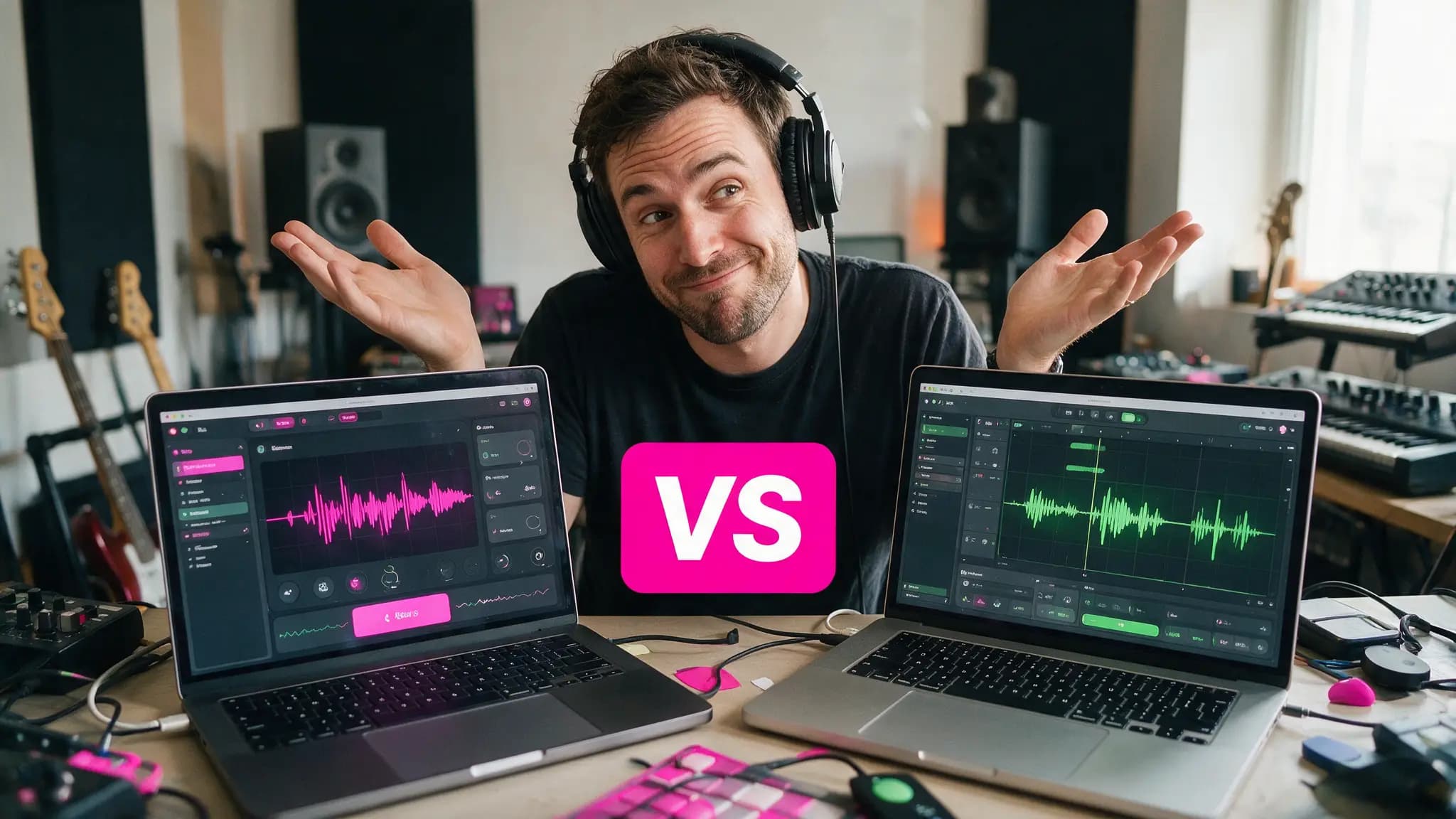
Suno has spent two years being the answer to "which AI music tool." Lyria 3.5, which replaced Lyria 3 Pro in Google Flow Music on July 29, does not beat it on range. It beats it on a narrower thing that matters more than it sounds: you can tell it the tempo.
By the numbers
| Lyria 3.5 | Suno | |
|---|---|---|
| Current version shipped | July 29, 2026 | Jul 15, 2026 update |
| Delivered through | Google Flow Music | Web, app, iMessage |
| Max vocal track | 3 minutes | Extend-based, longer |
| Tempo control | Direct | Prompt-influenced |
| Stem control | Vocals, drums, bass | Studio DAW + stems |
| Image-to-music | Yes | No |
| Genre breadth | Narrower | Broader |
| Per-song at volume | Not published per-song | ~$0.016 (Pro) |
| Free tier | Via Google AI plan tiers | ~10 songs/day, no commercial rights |
| Public API | No | No (partner programme) |
| Training-data litigation | Google's position is separate | Unresolved with majors |
Control versus range is the whole comparison
Suno's strength has always been that you can ask it for almost anything and get something plausible. Bluegrass, drum and bass, 80s city pop, a fake film score — the range is real and Lyria does not match it.
Lyria 3.5's strength is that when it gives you something 80% right, you can fix the 20% instead of re-rolling. Tempo is settable. Vocals, drums and bass can be pushed or pulled without regenerating the arrangement. Track length is a parameter, not an outcome.
Those are different products for different jobs. If you are producing a catalogue of background beds across many styles, breadth wins. If you are scoring one edit that is 94 seconds long and needs to sit at 112 BPM, control wins and it is not close.
Where each one actually breaks
Suno. Genre range comes with genre drift — ask for something specific enough and you get a neighbouring style delivered confidently. Its lyric writing is stronger than Lyria's but still lands on competent-and-generic when the words carry the song.
Lyria 3.5. Sustained vocal notes are where this class of model gives itself away, and vibrato regularity is the specific thing to A/B. Lyric-level writing reads as the weaker of the two on published samples. And image-to-music, the flashiest feature in the release, reads mood rather than content — it will not give you a guitar because you showed it a guitar.
Both should sit fine under instrumentation at phone-speaker volume. Treat an exposed solo vocal as the test neither has publicly passed.
A current hands-on Suno review that gives a fair sense of where its output actually lands:
The licensing split
This is the part that should drive a commercial decision more than any audio quality argument.
Suno is in unresolved litigation with the major labels over training data. That is a live risk on anything you monetize, and it has not moved to a conclusion through 2026. Google's Flow Music position is separate, with its own terms.
Neither of those is a green light. Read the current terms of whichever platform you pick, before each commercial release rather than once. This category's rules have changed repeatedly and will change again.
Decision table
| Your job | Take |
|---|---|
| Score to a locked picture edit | Lyria 3.5 |
| Wide range of genres, fast | Suno |
| Fix an almost-right track | Lyria 3.5 |
| Full song with extend/remaster flow | Suno |
| Non-English vocals, especially Japanese | Lyria 3.5 |
| Stems into a real DAW session | Suno (Studio) |
| Programmatic generation via API | Neither — use ElevenLabs Music |
The three-minute ceiling matters more than it reads
Length caps have quietly shaped what people make with these tools. When a model tops out near a minute, you write hooks and beds — fragments that work as background. Three minutes is a song, with room for a real second verse and a bridge that goes somewhere.
Suno has been able to reach that length for a while, but by extending: generate, extend, extend again, then remaster to smooth the joins. It works and the joins are usually invisible. It is also three or four operations where Lyria 3.5 is now one, and each extension is another chance for the arrangement to drift away from what you wanted.
The tradeoff runs the other way past three minutes. Suno's extend flow has no hard ceiling; Lyria's three-minute vocal cap is a wall. For anything long-form — a full instrumental bed for a twenty-minute video, say — Suno remains the only practical option of the two.
How we picked
A capability comparison, not a shootout — Lyria 3.5 is days old and we have not yet run matched briefs through both. Lyria feature set and date come from Google's own announcement; Suno pricing, tier and update details are carried from our Suno guide and Suno vs ElevenLabs, where they were verified against current published plans.
We did not run a blind listening test. Every published one we have seen tests isolated clips, and isolated clips are not how anyone hears music.
What didn't make the cut
A cost-per-song comparison. Suno publishes a per-song figure at the Pro tier; Lyria 3.5 is bundled into Google's plan structure and does not decompose into a comparable number. Forcing a ratio out of those two would be arithmetic, not information.
We also left out the Udio comparison — that is its own post and the litigation picture there is different again.
The honest summary
Suno if you need range and a finished-song workflow. Lyria 3.5 if you need to hit a tempo, a length, or a specific shot. That is less satisfying than picking a winner and more accurate to how the work goes — the two solve different problems, and the tempo-and-length problem did not previously have a good answer.
Frequently asked questions
▸Is Lyria 3.5 better than Suno?
For scoring to picture, yes — tempo, length and stem controls mean you can hit an edit instead of hunting for a usable generation. For breadth of genre and finished-song workflow, Suno is still ahead, and its Studio DAW has no equivalent in Flow Music.
▸Which is safer to use commercially?
Neither is settled, and they are unsettled in different ways. Suno is in unresolved litigation with the major labels over training data. Google's position on Flow Music is separate and its terms are its own. Read the current terms of whichever you pick before a commercial release, and re-read them per release.
▸Does Lyria 3.5 have an API?
Lyria 3.5 is delivered through Google Flow Music rather than as a standalone public music API. Suno has no public API either — it runs a partner programme instead. If you need programmatic music generation today, ElevenLabs Music is the one of the three with a production-ready API.
▸Can Lyria 3.5 make full-length songs?
It generates vocal tracks up to three minutes, which is radio-single length. Suno's workflow is built around extending and remastering to reach and pass that. For a single three-minute piece Lyria is now competitive; for a longer arrangement Suno's extend flow is still the more direct route.
The 5 best AI video finds, every week
New models, tested prompts, and what actually worked in our production — one short email a week. No spam, unsubscribe anytime.
Written by Priya Nair
AI Audio & Music Producer
Musician first, AI tester second. Judges every voice and song model on whether it would survive a real listener's headphones, not a spec sheet — and keeps a close eye on what's actually safe to monetize.
Explore these topics
Every guide, comparison and prompt library we have on each.