🎬 Seedance 2.5 Prompt Library: 12 Tested Templates (2026)
Copy-paste Seedance 2.5 prompts for cinematic shots, 30-second ads, UGC and POV formats — plus the structure rules that survive the jump from 2.0 to 2.5.
Jordan Reyes · AI Video Producer
· 4 min read
⚡ TL;DR — quick answers
- What changed for prompting between Seedance 2.0 and 2.5?
- The big three: 30-second continuous generation (so prompts can carry hook → beats → CTA arcs in one pass), up to 50 multimodal references, and region-level edits. Core grammar is unchanged — references lock the look, the prompt drives motion.
- How long should a Seedance 2.5 prompt be?
- One camera move and one clear action per shot beat still wins. For 30-second clips, write 3–5 timed beats rather than one dense paragraph — the model holds story flow better when each beat has a single job.
- Do Seedance 2.0 prompts still work on 2.5?
- Yes — 2.5 is backward-compatible with 2.0-style prompting. The templates here add the longer-duration arc structure and heavier reference stacks that 2.5 unlocks.
We've pushed hundreds of Seedance generations through production pipelines — kids animation, documentary B-roll, product spots — and the single biggest lesson carries straight into 2.5: references lock the look; the prompt's only job is motion and story. Seedance 2.5 raises the ceiling with 30-second continuous takes, up to 50 multimodal references, and region-level edits (our complete 2.5 guide covers the model itself). This page is the working prompt library.
By the numbers
- 30-second continuous single-pass generation (up from 15s-class clips in 2.0 workflows)
- Up to 50 multimodal references per generation — faces, products, style frames, audio cues
- Native 4K output tier and region-level edit control
- Our tested rule from 2.0 that still holds: one camera move per shot beat — stacked moves are where coherence dies
The template grammar
Every prompt below follows the same skeleton — subject + single action, one camera instruction, environment/light, then a global style line. For 30s clips, stack 3–5 timed beats:
[0-6s] <beat 1: hook action, camera move>
[6-18s] <beat 2: development, new angle>
[18-30s] <beat 3: payoff/CTA, settle>
Style: <one global line — grade, lens, era, mood>
Cinematic & narrative
1. Slow-push character reveal
A weathered fisherman mends a net on a misty dock at dawn, hands moving with practiced rhythm. Camera: slow push-in from wide to medium over the full shot. Soft grey-blue morning light, gentle fog drift. Style: 35mm anamorphic, muted teal grade, quiet documentary realism.
2. 30-second three-beat story arc
[0-8s] A young architect pins sketches to a studio wall at night, city bokeh behind glass. Camera: slow lateral dolly right.
[8-20s] She steps back, arms crossed, eyes scanning the wall; one sketch flutters to the floor. Camera: static medium, shallow focus.
[20-30s] Close on her slow smile as dawn light creeps across the drawings. Camera: gentle push-in.
Style: warm tungsten-to-daylight transition, 50mm, soft film grain, hopeful tone.
3. Whip-pan energy without "fast" (speed words degrade motion quality — use camera grammar instead)
A skateboarder drops into a sunlit concrete bowl. Camera: whip pan following the carve, then locks steady as he airs the lip. Golden hour, long shadows. Style: 24fps action-doc look, crisp motion blur, saturated warm grade.
Ads & product (the 2.5 sweet spot)
4. Hook → value → CTA direct-response spot
[0-5s] Hands crack open a matte-black earbuds case on a marble counter, lid flip toward lens. Camera: top-down macro.
[5-20s] Cut rhythm: earbud seats in ear, runner's stride on a bridge at sunrise, waveform pulse overlay on beat. Camera: one clean orbit around the runner.
[20-30s] Product floats center on soft grey, logo-safe negative space upper third. Camera: slow settle to static.
Style: premium tech-ad grade, high-key, cool neutrals with one orange accent.
Attach pack shots and a lifestyle still as references so the SKU stays identical across beats — with 50 reference slots, lock the product from three angles minimum.
5. UGC-style testimonial frame
A woman in her 30s talks to camera in a bright kitchen, holding a serum bottle near her cheek, natural gestures, occasional glance at the bottle. Camera: static handheld feel with subtle micro-shake. Daylight from window left. Style: iPhone-authentic, unretouched skin texture, casual vlog energy.
Formats that travel (Shorts / Reels)
6. Ultra-real POV walk
First-person POV walking through a lantern-lit night market, vendors call out, steam rises from a wok as we pass, a hand (ours) reaches for skewers. Camera: one continuous unbroken POV take, natural head-bob. Style: photoreal, ambient tungsten glow, immersive vlog realism.
One continuous take beats fast cuts for POV realism — cut rhythm belongs in the edit, not the generation.
7. Kids-animation musical beat (grid/reference-locked characters)
A round yellow duckling and a small blue bunny bounce in sync on lily pads, splash rings on each landing, both mid-laugh. Camera: locked wide, gentle bounce with the beat. Style: 3D toddler animation, soft rims, candy palette, CoComelon-adjacent cheer.
8. Docu B-roll with baked-in SFX cue
Archival-feel close-up: a radium-dial painter's brush touches glowing green paint in a 1920s factory, dust motes in slanted window light. Camera: slow macro drift. Audio: room tone, faint clock tick. Style: desaturated sepia, period-accurate props, restrained horror-of-history mood.
Period accuracy is a pre-flight check, not a hope — strip modern fixtures from the prompt or references before you spend the credits.
Region edits & reference stacks (2.5-only tricks)
9. Region-level wardrobe swap
Same shot, same performance: replace the presenter's grey hoodie with a navy blazer, keep face, hands, lighting and background untouched. Region: torso clothing only.
10. Style-frame transfer
Apply the attached neon-noir style frame to this street scene: preserve blocking and camera path, shift grade to magenta-cyan neon, wet asphalt reflections. References: 1 style frame, 2 character faces (locked).
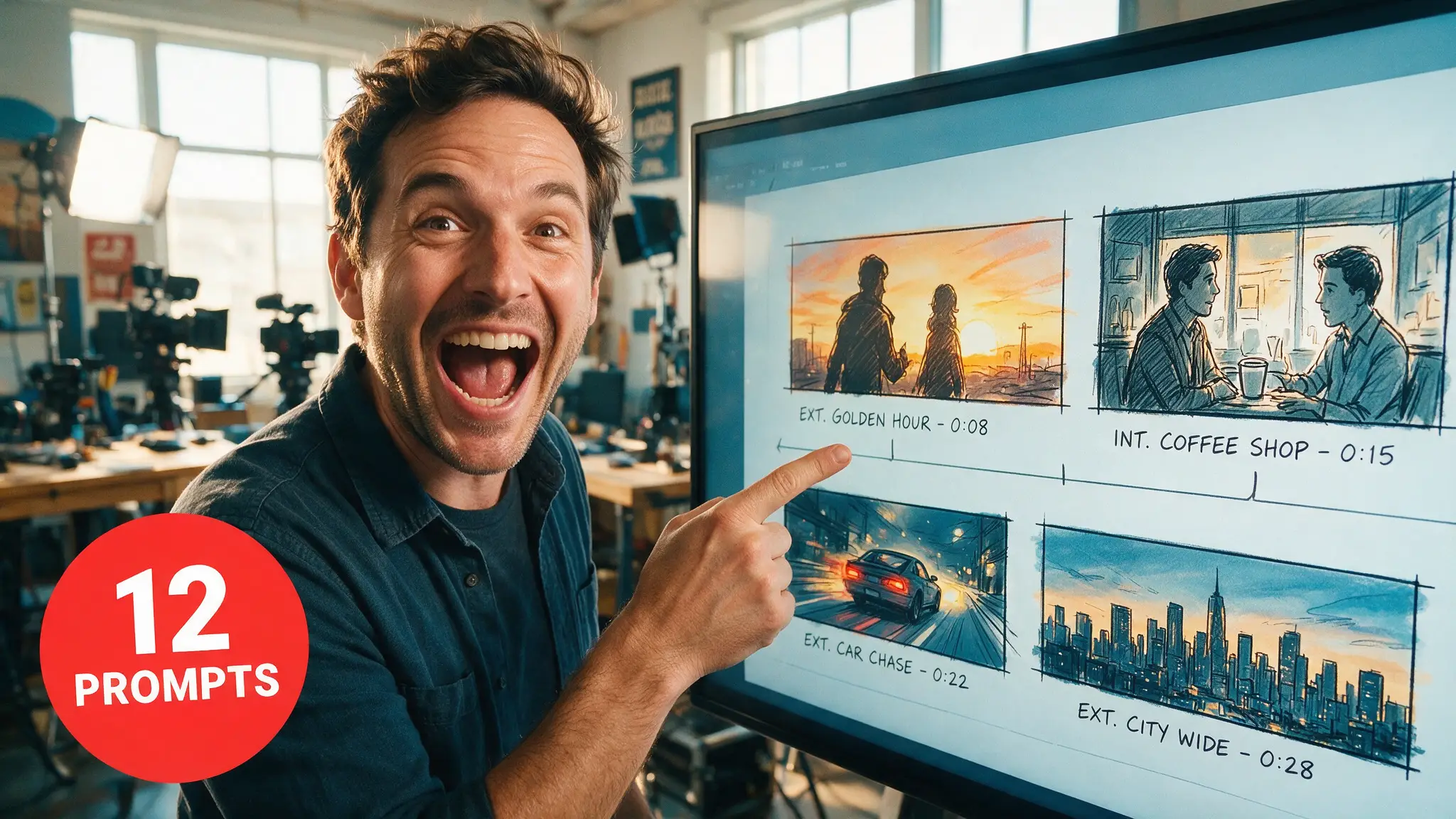
11. Multi-shot sequence from one storyboard grid — attach a 3×3 board as reference:
Generate a 9-cut sequence following the attached storyboard grid left-to-right: each cell one beat, distinct angles as drawn, continuity of costume and light throughout. Style: single global grade from cell 1.
12. Audio-led rhythm cut
[0-30s] A barista pours latte art in one unbroken take; every visual accent (pour, tap, slide) lands on the attached track's downbeats. Camera: overhead to 45° drift, one move. Style: cozy café warmth, shallow depth.
What we cut (and why)
We dropped 2.0-era workarounds that 2.5 makes obsolete: multi-generation stitching for anything over 15 seconds, and the "describe the product in every beat" hack — reference stacks now carry identity better than prose ever did. Hard timestamps inside a single camera move still hurt more than help; keep beats coarse.
If you're choosing between models for a given job, our Kling 3.0 vs Seedance 2.5 breakdown maps strengths per format, and the 2.0 prompt library remains fully compatible when you need the classics.
Frequently asked questions
▸What changed for prompting between Seedance 2.0 and 2.5?
The big three: 30-second continuous generation (so prompts can carry hook → beats → CTA arcs in one pass), up to 50 multimodal references, and region-level edits. Core grammar is unchanged — references lock the look, the prompt drives motion.
▸How long should a Seedance 2.5 prompt be?
One camera move and one clear action per shot beat still wins. For 30-second clips, write 3–5 timed beats rather than one dense paragraph — the model holds story flow better when each beat has a single job.
▸Do Seedance 2.0 prompts still work on 2.5?
Yes — 2.5 is backward-compatible with 2.0-style prompting. The templates here add the longer-duration arc structure and heavier reference stacks that 2.5 unlocks.
▸Why do my Seedance prompts get moderation-flagged?
Common false-positive triggers we've hit in production: distress wording, tight solo close-ups of children, and certain props like railings or podiums. Reword toward neutral, wide, multi-subject framings and regenerate.
The 5 best AI video finds, every week
New models, tested prompts, and what actually worked in our production — one short email a week. No spam, unsubscribe anytime.
Written by Jordan Reyes
AI Video Producer
Runs multiple faceless YouTube channels and tests every major AI video model against the same prompts before recommending one. Tracks render time and credit cost like other people track calories.
Explore these topics
Every guide, comparison and prompt library we have on each.