⚖️ Seedance 2.5 vs Seedance 2.0: What the Live API Shows
Seedance 2.5 vs Seedance 2.0 from the shipped API, not marketing: 2.0 renders 4K while 2.5 caps at 720p, start frames stay 2.0-only, and who gets which job.

Jordan Reyes · AI Video Producer
· 6 min read
⚡ TL;DR — quick answers
- Is Seedance 2.5 higher resolution than Seedance 2.0?
- No. On Higgsfield's shipped API, seedance_2_5 renders 480p or 720p only, while Seedance 2.0 in std mode now goes up to native 4k. The marketing page still advertises native 4K for 2.5, and ByteDance itself has never published a resolution for the model.
- Can Seedance 2.5 use a start frame or end frame?
- No. The shipped 2.5 parameters have no start- or end-frame roles, so you cannot pin a first frame or land on a target frame. Seedance 2.0 keeps start_image and end_image, which is why keyframe and grid pipelines should stay on 2.0 for now.
- How long can each model generate in one pass?
- Seedance 2.5 runs 4 to 30 seconds per generation; Seedance 2.0 runs 4 to 15. 2.5 also has a video_extension mode, and ByteDance says a clip can be extended twice, which puts roughly 90 seconds of continuous footage in reach.
We pulled the shipped parameter list for seedance_2_5 from Higgsfield's live model catalog on August 7, and the strangest line in it is the resolution enum: 480p or 720p. That's the whole list. Seedance 2.0, the model 2.5 supposedly replaces, renders native 4k on the same platform.
Most comparisons have that backwards, because most comparisons were written from launch marketing. This one is written from the API that shipped. The short verdict: 2.5 is the better generator, 2.0 is the better pipeline tool, and version numbers are a bad routing system.
By the numbers
| Spec | Seedance 2.0 | Seedance 2.5 | Source |
|---|---|---|---|
| Duration per pass | 4–15s | 4–30s | Higgsfield live catalog |
| Max resolution | Native 4k (std mode; fast stays 480p/720p) | 480p or 720p only | Higgsfield live catalog |
| Frame pinning | start_image / end_image | None | Higgsfield live catalog |
| Modes (2.5) | n/a | t2v (default), omni_reference, video_edit, video_extension | Higgsfield live catalog |
| Native audio | generate_audio (newly added) | generate_audio, default on | Higgsfield live catalog |
| References (2.5) | n/a | Image + video + audio; "up to 50 multimodal inputs" is a vendor claim, no API cap published | Higgsfield live catalog / Higgsfield claim |
| Extension | n/a | extension_mode backward or forward; extendable twice | Higgsfield live catalog / ByteDance Seed |
| Six-category bake-off | Posture resets, limb clipping on fast moves | Won creatures, all 3 music-video categories, transformations | Higgsfield blog |
| Consumer launch (2.5) | n/a | July 31, via Jimeng and Doubao | ByteDance Seed |
| Credit pricing (2.5) | n/a | Unpublished | Higgsfield live catalog |
The 4K twist nobody prints
Higgsfield's own Seedance 2.5 page still advertises "up to native 4K." The shipped enum says 480p or 720p, and ByteDance has never published a resolution for this model at all. We flagged a wrong 4K number once before in our shipped-spec ledger; consider this the receipts follow-up. The enum is the contract.
Meanwhile 2.0 quietly picked up native 4k in std mode in the same catalog update, along with bitrate_mode and its own generate_audio flag. Fast mode stays 480p/720p, and Seedance 2.0 Mini remains the 480p/720p budget tier. So the "old" model is currently the only Seedance that can hand you a 4K master.
If your delivery spec says 4K, this comparison is over before it starts.
Keyframe pipelines have nowhere to go
The second structural gap: seedance_2_5 has no start- or end-frame roles. You cannot pin a first frame, you cannot land on a target frame, and no reference image will force either. 2.0 keeps start_image and end_image.
That one line decides the model choice for every keyframe workflow we run. Our whole still-to-video pipeline assumes an approved frame goes in and motion comes out, and on 2.5 that contract does not exist. If your process starts from a locked image, stay on Seedance 2.0 and don't feel a day behind.
Also missing on 2.5, while we're counting: seed control, the std/fast split, the genre field, and the Identity-Lock and reference-strength sliders several early write-ups described. None shipped. (The full inventory is in every 2.5 setting explained.)
What 2.5 actually buys you
Length, modes, and sound.
The duration field runs 4–30 seconds against 2.0's 4–15, and the 30-second single pass matches what ByteDance announced for the model on June 23. Four modes ship: t2v is the default; omni_reference takes image, video and audio references (Higgsfield claims up to 50 multimodal inputs, which lines up with ByteDance's 30-image, 10-video, 10-audio split, though the API publishes no cap); video_edit does region-level repairs and bills by the reference video's duration; video_extension grows a clip backward or forward. Chained per ByteDance's stated two-extension limit, that reaches roughly 90 seconds — the math is in our video extension guide.
generate_audio defaults to true, so 2.5 clips arrive with native sound unless you switch it off.
ByteDance also claims roughly 20% better prompt adherence than 2.0. Vendor number, not ours, but it matches the bake-off below more than we expected.
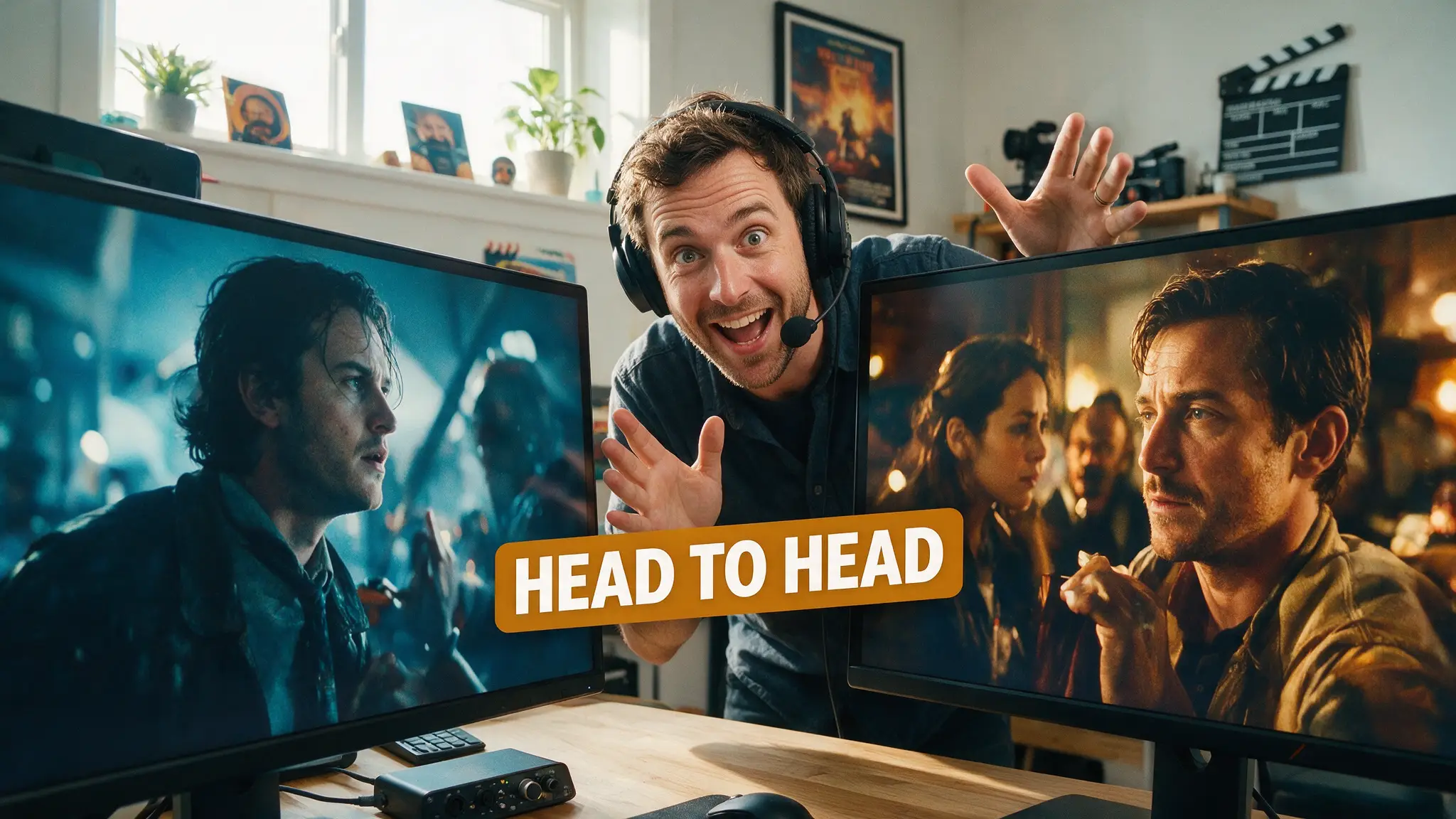
Higgsfield ran the head-to-head so we don't have to pretend
Higgsfield's own six-category test put identical prompts through both models. 2.5 took creatures, all three music-video categories, and transformations. Their notes read like a physiotherapy report: lipsync stayed precise under strain, anatomy held, limbs stopped clipping, and choreography carried real weight on 2.5, while 2.0 showed posture resets and limbs clipping through bodies on fast moves.
A platform grading its own new model deserves a raised eyebrow, so watch a third party run the same experiment at scale:
Thirty-four videos and seventeen prompts later, the pattern holds. Motion coherence is 2.5's win. Resolution is not.
The unlimited wrinkle
Higgsfield's 14-Day Seedance Unlimited offer complicates the routing. Week one is unlimited Seedance 2.0 at 4K; most plans render 4K at 8 seconds per generation, while Plus-monthly gets 1080p at 8s or 720p at 15s. Week two lets you pick one other Seedance model to go unlimited on, and 2.5 is on that list, with caps to be determined.
The fine print matters. The offer works on the Higgsfield website only, explicitly not MCP, CLI, Canvas or Supercomputer; the top Ultra, Max and Team plans are ineligible; new users get a 24-hour trial of 5 generations on 2.0 at 4K/8s. API calls to seedance_2_5 bill credits at a rate Higgsfield has not published, so probe one job before you batch. Access paths in full: how to access Seedance 2.5.
Which model gets which job
- Pinned first or last frame (keyframe, grid, animatic pipelines): 2.0, no contest
- 4K delivery master: 2.0 std
- Cheap volume drafts: 2.0 Mini or fast
- A continuous 20–30-second take: 2.5
- Identity held by references (faces, products, choreography): 2.5 omni_reference
- Repairing one bad region of a good clip: 2.5 video_edit
- Takes past 30 seconds: 2.5 video_extension
- Unlim week one: 2.0 by definition; week two: pick 2.5
Our pick
2.5, narrowly. Motion quality and the 30-second ceiling win more of our actual jobs than 4K does, and a clean 720p upscales better than broken anatomy repairs. But the day a brief says "4K master" or a storyboard hands us a locked first frame, we're back on 2.0 without a second thought. Both stay on the rig. Version numbers are marketing; parameters are policy.
How we checked
Every 2.5 parameter here was verified against Higgsfield's live model catalog on August 7, read off model id seedance_2_5 on our own account. The six-category results are Higgsfield's blog, quoted as their findings; we have not re-run their test. Launch dates, the two-extension limit and the ~20% adherence figure are ByteDance Seed's statements. ByteDance's own BytePlus ModelArk API access is still listed as coming soon, so Higgsfield is currently the shipped way to call this model.
Last verified: August 7, 2026.
The next number to watch isn't resolution at all. It's the credit price, which is still a blank line on the receipt.
Frequently asked questions
▸Is Seedance 2.5 higher resolution than Seedance 2.0?
No. On Higgsfield's shipped API, seedance_2_5 renders 480p or 720p only, while Seedance 2.0 in std mode now goes up to native 4k. The marketing page still advertises native 4K for 2.5, and ByteDance itself has never published a resolution for the model.
▸Can Seedance 2.5 use a start frame or end frame?
No. The shipped 2.5 parameters have no start- or end-frame roles, so you cannot pin a first frame or land on a target frame. Seedance 2.0 keeps start_image and end_image, which is why keyframe and grid pipelines should stay on 2.0 for now.
▸How long can each model generate in one pass?
Seedance 2.5 runs 4 to 30 seconds per generation; Seedance 2.0 runs 4 to 15. 2.5 also has a video_extension mode, and ByteDance says a clip can be extended twice, which puts roughly 90 seconds of continuous footage in reach.
▸Is Seedance 2.5 covered by Higgsfield's unlimited offer?
Only as a week-two choice, and only on the Higgsfield website. Week one of the 14-Day Seedance Unlimited deal is unlimited Seedance 2.0 at 4K; in week two you pick one other Seedance model, which can be 2.5, with caps still to be determined. API and MCP calls always bill credits.
The 5 best AI video finds, every week
New models, tested prompts, and what actually worked in our production — one short email a week. No spam, unsubscribe anytime.
Written by Jordan Reyes
AI Video Producer
Runs multiple faceless YouTube channels and tests every major AI video model against the same prompts before recommending one. Tracks render time and credit cost like other people track calories.
Explore these topics
Every guide, comparison and prompt library we have on each.