🎶 ElevenLabs Music v2: Inpainting and Genre-Switching in 2026
ElevenLabs Music v2 adds inpainting to fix one section without touching the rest, plus mid-track genre-switching. What changed and how to use it in 2026.

Priya Nair · AI Audio & Music Producer
· 7 min read
⚡ TL;DR — quick answers
- What's new in ElevenLabs Music v2?
- Two headline features. Inpainting regenerates a single section of an existing track, like the bridge, while leaving the rest untouched. Genre-switching shifts a song from one genre to another mid-track, opera to heavy metal and back in ElevenLabs' own example, without breaking vocal coherence, and can embed non-musical sound effects directly in the track. ElevenLabs announced it May 26, 2026 and launched it May 27, 2026.
- How does inpainting work in ElevenLabs Music v2?
- You select an already-generated section of a track and regenerate only that part from a new prompt. Everything else stays untouched, including sections built independently as part of ElevenLabs' section-by-section composition workflow, where intros, verses, and choruses can be composed separately and re-generated later without disturbing the rest.
- Is ElevenLabs Music v2 safe to use for commercial projects?
- ElevenLabs says Music v2 was trained exclusively on licensed data and is cleared for commercial use, and draws that contrast directly against Suno and Udio, both of which face active copyright litigation from major labels. Confirm the license terms on your own plan before relying on that for a client deliverable.
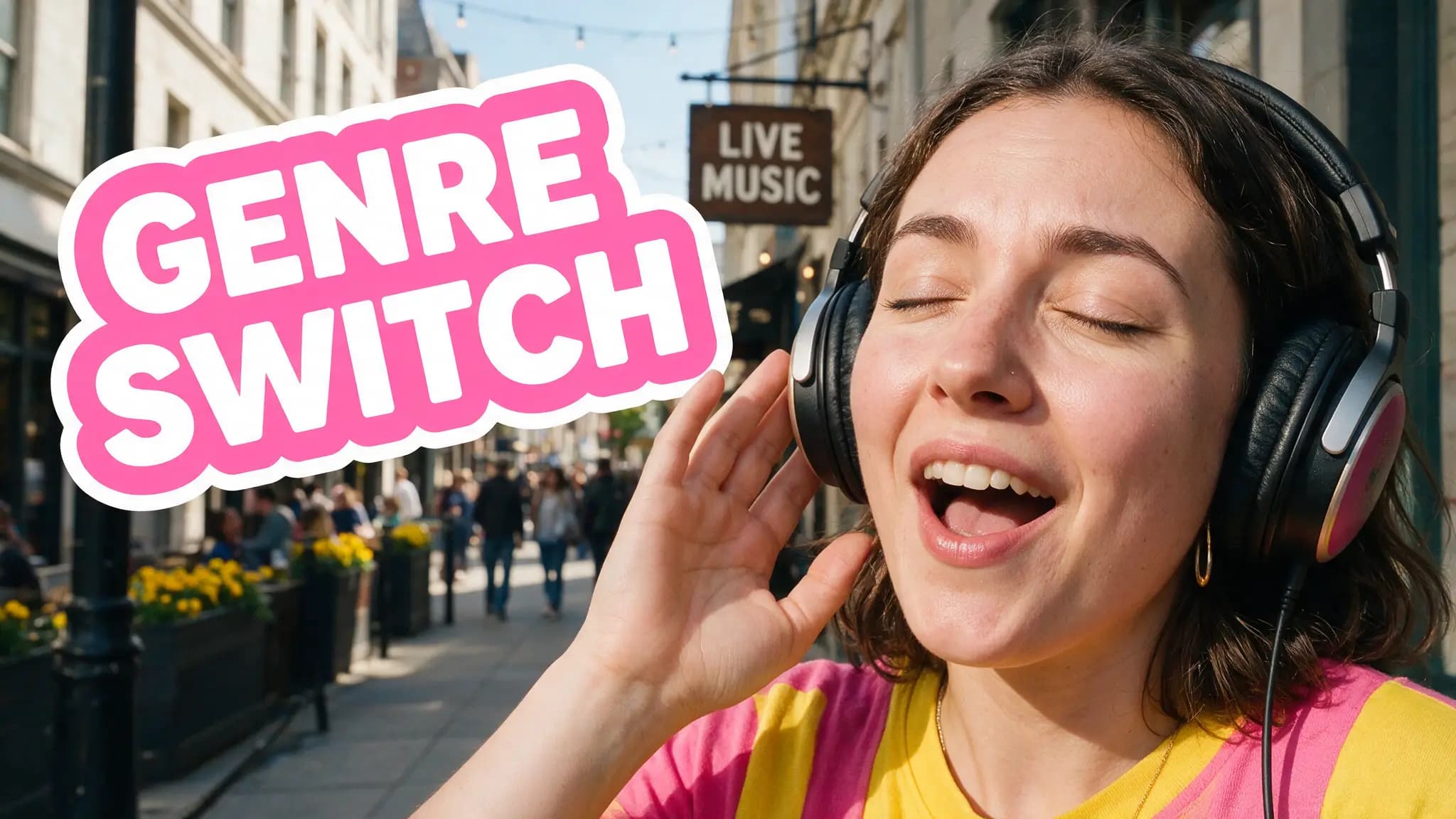
ElevenLabs' own demo for Music v2 swaps a track from full opera into distorted heavy metal and back inside one generation, and the vocal holds pitch and diction through both jumps. That's the part worth sitting with. A genre change that dramatic used to mean two separate generations stitched together in a DAW, with a crossfade doing the work of hiding the seam. Music v2, announced May 26, 2026 and launched the next day, does that stitching inside the model itself.
The second headline feature is quieter but probably more useful on a Tuesday: inpainting. Pick a section of a track you already generated, the bridge, say, and regenerate only that section from a new prompt. The verse before it and the chorus after it don't move. Anyone who's gotten 90% of a good song and then watched a full regeneration wreck the other 90% while fixing the 10% knows exactly what problem this solves.
By the numbers
- Announced May 26, 2026, launched May 27, 2026 — straight from ElevenLabs' own blog post (elevenlabs.io)
- Genre-switching mid-track holds vocal coherence through fast rap delivery, multilingual lyrics, and complex arrangements, per ElevenLabs, and can drop non-musical sound effects into a track without breaking the musical line
- Inpainting regenerates any selected section of an existing track while the rest stays untouched; section-by-section composition means intros, verses, and choruses can be built separately and re-generated independently later
- Music v2, alongside the older Music v1, powers three products: ElevenMusic (consumer app), ElevenAPI (developer API), and ElevenCreative (self-serve creative tool)
- Trained exclusively on licensed data, cleared for commercial use
- Pricing dropped up to 50% for ElevenAPI customers and up to 40% for ElevenCreative customers at launch — exact new rates weren't confirmed anywhere I could verify, so check the current numbers on elevenlabs.io before you budget a project
Inpainting: how to actually use it
The workflow is section-first now, not song-first. Generate a full track, or build one section by section from the start: intro, verse, chorus, each addressable on its own. Don't like the bridge? Select it, write a fresh prompt for just those eight bars, regenerate. Everything outside the selection stays exactly as it was.
That changes how you'd write a prompt in the first place. Instead of one paragraph trying to describe an entire three-minute arc, you're writing shorter, targeted prompts per section, closer to how a producer punches in one vocal line rather than re-singing the whole song to fix a single flat note. For anyone shipping music on a deadline, a jingle that needs one weak verse fixed the day before a client call, or a background bed where only the outro drags, that's a ten-minute fix instead of a full restart.
I'd still audition the seam myself before shipping anything. ElevenLabs says untouched sections don't move, and structurally that should hold since it's the same principle behind the modular editing already in Eleven Music's tools. But a regenerated section is a new generation matched to a written prompt, not literally spliced audio. The join is a judgment call made by the model, not a hard cut. Listen at the boundary on headphones before you sign off.
Genre-switching without losing the vocal
This is the feature that's actually new territory, not an incremental bump. Earlier AI music tools could give you a track in a genre. Landing a hard pivot mid-track, opera into metal in ElevenLabs' own example, while the same vocal performance survives the jump in pitch and diction, is a different and harder problem. Vocal coherence is usually the first thing to break when you push a model outside its comfort zone. That's where the artifacts tend to live: a vibrato that flattens out of nowhere, a consonant that gets swallowed mid-word.
In practice, you write the transition into the prompt the way you'd write a section change: name the genre shift and roughly where it lands. The complex cases ElevenLabs specifically calls out are worth taking seriously if this is your use case, since fast rap delivery, multilingual lyrics, and layered arrangements are each places vocal models have historically stumbled on their own, before anyone adds a genre swap in the middle of one.
Here's where I'm withholding the "indistinguishable from human" verdict, because nobody's handed me a blind test yet. A transition this aggressive is new enough that ElevenLabs is leading with it as the headline demo rather than burying it as a minor toggle. That tells me it's impressive. It doesn't tell me it's undetectable. If you're using this for anything that gets scrutinized, a sync placement, a release under your own name, run a critical headphone pass right at the transition point, not a casual listen through laptop speakers. That's where thinned-out harmonics and timing hiccups hide.
What changed, side by side
| Feature | Before Music v2 | Music v2 |
|---|---|---|
| Fixing one weak section | Regenerate the whole track and hope the rest survives | Inpaint just the selected section; the rest stays untouched |
| Genre changes | One genre per generation | Genre can shift mid-track (ElevenLabs' example: opera to heavy metal and back) while vocal coherence holds |
| Sound effects | Generated separately, mixed in by hand | Non-musical SFX can be embedded directly in the track |
| Commercial licensing | Suno and Udio face active label litigation | Trained exclusively on licensed data, cleared for commercial use |
| Products powered | Music v1 | Same three: ElevenMusic, ElevenAPI, ElevenCreative |
| Generation pricing | Prior rates | Cut up to 50% (API) / up to 40% (Creative) at launch, confirm current rates |
The licensing angle actually matters here
ElevenLabs is loud about one thing in the Music v2 announcement that isn't a feature at all: training data. Music v2 is trained exclusively on licensed material and cleared for commercial use, and ElevenLabs draws the contrast itself, directly, against Suno and Udio, both of which are dealing with active copyright litigation from major labels.
I'm not going to relitigate those lawsuits here. Their legal status keeps moving, and it's worth checking independently rather than trusting a music blog's summary of it, this one included. But the practical read for anyone monetizing is simple: a track built on a model with cleared training data is a materially safer bet for a client deliverable, a YouTube monetization claim, or a sync license than one built on a model currently being sued by people who might own the underlying catalog. Do your own diligence on the ElevenLabs agreement regardless. Starting from cleared training data just means you're not fighting the model's rights status on top of everything else.
For the head-to-head version of this, our Suno vs. ElevenLabs Music comparison walks through both platforms on the same terms.
How we're evaluating this
Music v2 launched May 27, 2026, which puts this about ten weeks after launch, not a same-day take. What I haven't run myself yet is a critical headphone pass on the genre-switch demo specifically, so the read here leans on ElevenLabs' own announcement and demo tracks, checked against how the modular section editing already behaved in Eleven Music's tools and the per-minute pricing we've tracked in the Music API and on the ElevenLabs tool page. Treat the vocal-coherence claims as vendor-demonstrated until I've put my own prompts through it and can point to a specific artifact instead of a general impression.
Generate something ordinary first, then force it to do the hard thing: the genre pivot, the single-section patch on a track you already like. Where it strains is where you'll actually learn what this model can and can't do, months before the next announcement tells you.
Frequently asked questions
▸What's new in ElevenLabs Music v2?
Two headline features. Inpainting regenerates a single section of an existing track, like the bridge, while leaving the rest untouched. Genre-switching shifts a song from one genre to another mid-track, opera to heavy metal and back in ElevenLabs' own example, without breaking vocal coherence, and can embed non-musical sound effects directly in the track. ElevenLabs announced it May 26, 2026 and launched it May 27, 2026.
▸How does inpainting work in ElevenLabs Music v2?
You select an already-generated section of a track and regenerate only that part from a new prompt. Everything else stays untouched, including sections built independently as part of ElevenLabs' section-by-section composition workflow, where intros, verses, and choruses can be composed separately and re-generated later without disturbing the rest.
▸Is ElevenLabs Music v2 safe to use for commercial projects?
ElevenLabs says Music v2 was trained exclusively on licensed data and is cleared for commercial use, and draws that contrast directly against Suno and Udio, both of which face active copyright litigation from major labels. Confirm the license terms on your own plan before relying on that for a client deliverable.
▸Did ElevenLabs Music v2 change pricing?
Yes. Alongside the launch, ElevenLabs cut music generation pricing by up to 50% for ElevenAPI customers and up to 40% for ElevenCreative self-serve customers. Exact new dollar figures weren't published anywhere we could verify, so check current pricing on elevenlabs.io before budgeting a project.
The 5 best AI video finds, every week
New models, tested prompts, and what actually worked in our production — one short email a week. No spam, unsubscribe anytime.
Written by Priya Nair
AI Audio & Music Producer
Musician first, AI tester second. Judges every voice and song model on whether it would survive a real listener's headphones, not a spec sheet — and keeps a close eye on what's actually safe to monetize.
Explore these topics
Every guide, comparison and prompt library we have on each.